Latinos Long Horizon: Stewardship, Family Roots & Legacy
Latino entrepreneurs, are the direct beneficiaries of the trees planted by parents who worked double shifts, did back-breaking work.
When we read about philanthropy in the business world, the conversation is almost always dominated by headlines about the ultra-wealthy writing massive, multi-million-dollar checks. We’re taught to believe that meaningful impact only happens on an institutional scale, after a founder reaches an astronomical level of surplus capital. Yet for most of us, those massive gifts feel distant and abstract. It is rare to have any real insight into where those dollars actually land, how much gets swallowed up by administrative overhead, or what positive changes are made on the ground.
In our Latino communities, real giving has never worked that way. If you grew up watching parents and family members work trades with their hands, giving back wasn’t a financial maneuver or a tax line item. It was visible, direct, and woven into everyday life. It was my mother altering a communion dress or a bridal veil for a friend out of the kindness of her heart, or my father packing up his tools on the weekend to help fix a friend or relative’s electrical wiring or car without ever asking for a dime.
They understood a fundamental truth that Wall Street often forgets: the most meaningful support is the kind you can see in action. As independent creative entrepreneurs, authors, and makers, we don’t need an eight-figure bank account to make a measurable difference. In fact, micro-targeted giving is often far more powerful than distant corporate philanthropy because it is personal, transparent, and immediate. You know the exact student, classroom, or neighborhood project your work is supporting.
Integrating that level of community stewardship into your business from the very beginning isn’t just good values—it builds an authentic foundation of trust and loyalty that no marketing budget can buy. And sometimes, it gives you the chance to honor the grassroots leaders who paved the way and finish a legacy that started decades before you had a business of your own.
The Stalled Dream in Defiance, Ohio
Every time I visited my parents back in Ohio, there was a story my mother, Berta Treviño, would share with me, always with a touch of lingering sadness.
Back in the 1980s, when she and my father, Tristan Treviño, helped co-found and serve the Hispanic Awareness Organization (HAO) in Defiance, my mom found a kindred spirit and deeply cherished mentor in Lorraine Andrews. Lorraine was a respected civic leader in town, quite a bit older than my mother, and an extraordinary cross-cultural bridgebuilder. At a time when institutional grant writing was largely an insider’s game closed off to working-class Latino families, my mom looked up to Lorraine as a guide who knew how civic league networks functioned and how to navigate regional grant funding.
My mother, Lorraine, and the other HAO members were also doing active, visible cultural groundwork across Defiance County. They took Latino/Hispanic culture, traditions, and pride directly into spaces where our heritage was rarely seen staging celebrations in local parks, setting up vibrant cultural exhibits in shopping malls, and bringing traditional dress, music, and storytelling into public libraries and city classrooms.
For me, growing up out in rural Ayersville, my parents’ involvement in HAO was my only exposure to other Latino kids aside from my local cousins. In my own school district, there were virtually no other Hispanic families. Walking into HAO community gatherings in Defiance was an eye-opening cultural immersion. The kids in town spoke Spanish fluently; they had an easy, laid-back way of speaking English and Spanish together. Hanging out with them, I sometimes felt a bit out of place or not Latino enough, caught in that in-betweenness of wondering where you fit when you don’t share the exact same fluency as the other Latino kids.
That experience taught me something early that corporate diversity initiatives—and sometimes even Latinos ourselves—still struggle to understand: our community is not a singular identity, yet when we recognize our similarities, our shared struggles, and our cultural overlaps, we are stronger as a whole and can accomplish amazing things together.
When my mom and Lorraine imagined establishing a self-funding scholarship program, their vision was practical, grounded, and personal: secure grant backing and community sponsorships to award two $500 scholarships each year to local Latino students stepping out into the world. Lorraine brought the seasoned civic know-how; my mom brought the relentless grassroots connection to local families. But as so often happens in volunteer organizations and committee rooms, the broader membership could never come to the same agreement on how to allocate the sponsorship and grant monies. Competing priorities stalled the momentum, and the program never came to fruition.
For over forty years, that unfulfilled project stayed with my mother. She’s carried it in her mind as an unfinished promise to Lorraine and to the young people of Defiance County. For a long time, I listened to this story with an understanding of an unfinished project that would have served the Latino youth of our town, but I didn’t fully comprehend the importance of it until recently—when my own creative business placed me in front of rooms full of older high school students preparing to cross the threshold into adult life.
The Reality in the Classroom: Determination, Duty, and Unguided Ambition
As part of my educational workshops, I work with high school seniors preparing to transition into trade school, college, the military, or the workforce. We focus on practical, real-world readiness: crafting “glow-up” bios, developing elevator pitches to articulate their value when meeting potential mentors or employers, and translating everyday life into professional resumes.
I teach them how to look at jobs that society often dismisses as low-end and extract the true tradecraft:
- Working a cash register isn’t just ringing up sales; it is forward-facing customer service, conflict resolution, and accurate financial reconciliation.
- Working the line at a pizza shop isn’t just food prep; it is fast-paced inventory tracking, quality control, and managing customer expectations under pressure.
- Translating mail and official documents for parents and elders at home or church demonstrates advanced bilingual communication, document interpretation, and community relations.
Sitting in those rooms, I noticed an emerging pattern among the Latino students.
Many of them were not pulling a 3.8 or 4.0 GPA. But when you asked why, the truth was sobering: they weren’t disengaged; they were exhausted.
They were working twenty to thirty hours a week to help their families’ pay bills. They were going home immediately after the final school bell to watch younger siblings or care for ailing elders while their parents worked day shifts, only to hand off household duties and clock in for their own late-night jobs the moment their parents walked through the door.
I spoke with young women whose first instinct was to say they just wanted to get married. There is honor in marriage and family, but as women and men, we must have independent, real-world skills to navigate life when hardships hit—the ability to hold a job, if necessary, the ability to understand family finances, and the confidence to stand on our own.
Then there was the young woman who carried a heavy burden that many children of immigrant small business owners understand: she had the intellect, drive, and deep desire to go to college, but she felt trapped under the weight of guilt. Her parents ran a restaurant, and they relied on her labor to keep the business running. She struggled over the choice in front of her: pursue her own education and future or leave it behind because she knew that leaving might create an additional hardship for her parents. That kind of devotion and sacrifice never shows up on a standard college application essay, yet it represents an extraordinary level of loyalty and work ethic.
In that same room, I met another young Latino senior who had been introduced to me via email before I arrived. Having spent over thirty years in the fashion industry before launching my publishing career, I was genuinely impressed by the thoughtful list of technical questions he had drafted for me about fashion design.
When I finally met him in person, he was engaging and bright. But when I asked if he was involved in any extracurricular activities at school, he told me no—he spent up to six hours every day after school playing billiards. I asked him if he knew how to sew. He said no but reiterated that his ultimate dream was to be a fashion designer.
I gave him a candid roadmap of what the apparel industry actually looks like: the climb up the ladder, sketching, learning construction, understanding textiles, and putting in long studio hours. I also shared that technology and globalism today offer tools I never had when I was his age, encouraging him to research starting an online print-on-demand line of apparel merchandise to test ideas. He missed the point and immediately pointed down to the jeans he was wearing and said he wanted to launch an online denim brand right now. I had to gently explain that denim is a very difficult apparel category that cannot easily be launched on a small scale—the minimums, wash treatments, attention to fit, and specialized machinery make it one of the hardest sectors to enter without substantial capital.
His story struck me in a completely different way. Here was a young man with massive dreams and genuine curiosity, but absolutely no one in his corner to ground him, guide him, or teach him the sheer amount of discipline and execution required to turn a vision into a viable enterprise. Although on the surface it might have looked like a lack of ambition, what he truly lacked was mentorship and honest guidance on the craft and work required to get there.
These Latino students each had unique challenges to face. The potential and ideas were there, but some were torn in half by family duty, some were crushed under adult responsibilities put on teenage shoulders, and others were simply drifting because no one had ever shown them how to channel raw ambition into structured, hard work.
Breaking the Cycle of Traditional Philanthropy
After hosting these workshops, these students’ stories were etched into my mind, and I sat down with my parents at our dining room table. As we talked through what I had experienced with these students, the pieces finally locked into place for me.
My mom and Lorraine’s vision from the 1980s hadn’t disappeared; it was simply waiting for the right moment, the right understanding, the right people who wanted to go all in 100%, and the right resources to help build it.
Traditional scholarships, well-meaning as they are, are often designed for a specific reality:
- They require a high GPA, immediately disqualifying students who may not be able to devote their full time to top grades due to work or helping family households survive.
- They evaluate students strictly on traditional extracurricular clubs, ignoring the leadership, sacrifice, and operational responsibility required to run a family restaurant or care for a household.
- They overlook early vocational achievements, failing to recognize students who took the initiative to earn early certifications in specialized trades while still in high school.
- They require financial aid paperwork and tax returns, sometimes making families fear exposing their personal lives or documentation status to bureaucratic scrutiny.
- They distribute instructions solely in English, leaving out parents who want nothing more than to support their child but cannot read the application requirements.
- They restrict funds strictly to tuition at four-year universities, ignoring the value of vocational and trade schools, which also have high costs for tuition, certifications, and professional tools.
My parents and I realized that if we were going to build the fund that was envisioned forty years ago, we had to eliminate these barriers that prevent Latino students from achieving their career goals.
Designing an Accessible Scholarship
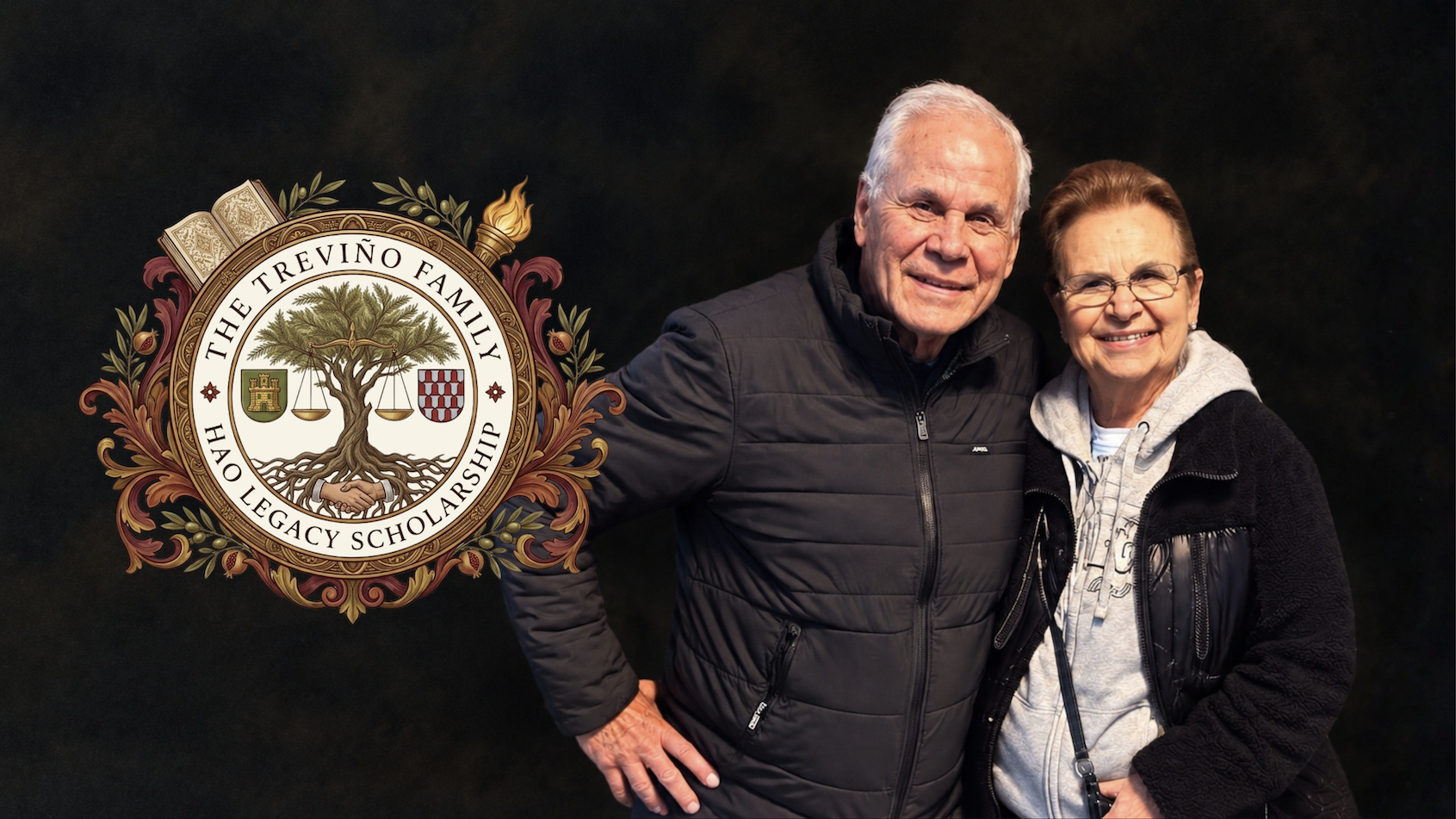
Working through the Defiance Area Foundation, we established The Treviño Family HAO Legacy Scholarship Fund, intentional about every single guideline:
- The 2.50 Unweighted GPA Threshold: We deliberately set the minimum cumulative unweighted GPA requirement at 2.50. We recognized that a student working 20 to 30 hours a week in a restaurant or caring for family possesses far more real-world resilience, determination, and time-management skills than a student with a 4.0 and no outside responsibilities.
- Valuing the “Invisible” Resume & Early Trade Certifications: We designed the application to evaluate real-life dedication: family business labor, caretaking, contributing to household survival, and commercial trade work. We made sure to ask whether students had already completed early vocational certifications (such as automotive repair, welding, electrical, precision machining, cosmetology, or allied health credentials). Earning an industry credential while balancing high school coursework demonstrates a level of drive, focus, and trade commitment that traditional transcripts miss.
- Universal Application (Trades, Colleges, and Real-World Expenses): We opened the $1,000 annual non-renewable award equally to students heading to accredited colleges or universities and those entering vocational, trade, or certified technical and apprenticeship programs. Furthermore, funds paid directly to the institution or training program can cover tuition, fees, books, required tools, supplies, or professional equipment.
- Removing the Financial Paperwork Barrier: Instead of requiring tax forms or FAFSA filings that may trigger anxiety around confidentiality and legal exposure, we created an open-ended narrative space where students can candidly explain their family’s financial reality in their own words.
- Bilingual Access: We provided accessible application materials so parents can sit at the kitchen table, read the requirements, and actively participate in their child’s educational journey.
- The “Bridge Conversation” (Optional Human Mentorship): One of the most personal components of our scholarship goes beyond the financial award—it is the bridge conversation. Selected recipients have the option to participate in a one-on-one virtual career and college mentorship session with our family selection committee. Alongside my parents’ mentorship and support, my brother, my sister, and I bring a wide variety of college learnings and professional career paths—spanning large-scale public-school infrastructure and capital improvements, corporate entertainment business affairs and global music sync licensing, and my own decades across fashion design, creative entrepreneurship, authoring, and publishing. Having siblings who navigated higher education and built distinct careers across diverse industries gives these young people a grounded sounding board to demystify the climb and bridge ambition with the real world.
How to Make It Happen
You do not need a team of lawyers or a corporate-sized bank account to bring community stewardship into your everyday life. It can be executed through practical, low-overhead ideas:
- The Community Foundation: You don’t have to do this on your own and carry all the administrative weight of managing a fund. Partner with an established regional community foundation or set up a donor-advised fund. They handle the tax receipts, investment oversight, legal compliance, and check disbursements, while you retain the freedom to design the mission, shape the application guidelines, serve on the selection committee, and mentor recipients. While many foundations set a target balance—often around $25,000—for a fund to become self-sustaining as an endowment, you can start small and grow it over time through family contributions, community outreach, local events, and the foundation’s public donation portal. Even better, if you want to make an impact right away in year one while your endowment is still building, ask about setting up a pass-through option so you can award $500 or more immediately.
- Micro-Percentages on Designated Lines: If you have a business, you can dedicate 3% to 5% of net proceeds from a specific product line or seasonal collection directly to your named scholarship fund. Clearly share that mission on your packaging, displays, website, and social media so every customer transaction becomes a shared act of community pride.
- The Reciprocal Non-Profit Booth Trade: If you are a small business owner selling products at local events, vendor fees can get pricey, sometimes running from $100 to $500. Partner at a hosted event with a mission-aligned community non-profit or civic center. Offer to design a hands-on, co-branded product that supports their mission. They host you in their event space for free because you provide something engaging and aligned with their goals, and you sell the products and donate all or a percentage of those proceeds back to the non-profit.
- Directing Donations Without the Escrow: Instead of taking on the bookkeeping headache of holding and tracking charitable dollars yourself, point your audience directly to vetted local organizations you support via prominent QR codes on your displays, social posts, or website, offering a small perk or discount for anyone who uses the code.
Goodwill and the True Definition of Legacy
In accounting, there is a term known as goodwill, which only shows up on a balance sheet when a business is valued or acquired to capture the intangible worth of its reputation, brand loyalty, and customer relationships. Yet real goodwill isn’t created on a spreadsheet or at a closing table; it is earned every day through how you treat people and show up for your community.
And in the real world, that goodwill becomes your greatest safety net. When economic downturns hit, when costs skyrocket, or when algorithmic shifts alter organic reach on social media, purely transactional businesses struggle to survive. But brands that have spent time pouring their authenticity into their local ecosystem, partnering with community organizations, and honoring their heritage don’t disappear. The community rallies around them because everyone wants a business that does right by its community to succeed. They share a vested interest in seeing it thrive.
There is also an ancient Greek proverb that is a favorite saying, “A society grows great when elders plant trees in whose shade they may never sit.”
As Latino entrepreneurs, we are the direct beneficiaries of the trees planted by parents who worked double shifts, did back-breaking work, worked under less-than-ideal conditions, or bootstrapped their own small salons, restaurants, stores, or businesses on their own so that we could have the luxury of learning from them and building on those blocks.
Our responsibility is not simply to extract revenue from our heritage and build private success. Our privilege is to take the intellectual property, the design skills, and the commercial engines we build and use them to construct a strong base for those coming behind us—giving them the guidance, accessible opportunities, and mentorship they need to step into the world with confidence.
The Hispanic Awareness Organization’s scholarship had to take a hiatus in the 1980s, but it was reborn at our dining room table this year because we refused to let that inspirational dream fade. This process of creating an endowment led my family to so many important conversations about the opportunities my siblings and I have had that aren’t always as accessible to young Latinos. Being able to come together now as a family to bring this vision to life makes establishing this fund personal for us.
As you move up your career ladder or build your business, it’s always important to remember to keep yourself anchored firmly in the community that shaped you. That is how a brand becomes an enduring legacy.
Related content:
Charting New Frontiers: Science and Engineering in the Latino Community
Invisible Work, Exhaustion: Latino Caregivers During Holidays