
Growing the sports in the U.S. and internationally while keeping its eye on maintaining credibility.
World Cup 2026
Spain.
Argentina.
England.
One of these three countries will be “your” 2026 World Cup champion in soccer/football.
I’m not going to lie to you, of all the sports in the world, soccer is not on my “must watchlist.” But I truly have been compelled by this World Cup, and I’ve watched more than I expected to, with some of the expectations I have being met; annoyed with the flopping and the timing, etc. But I also find a great appreciation for the athletes on the “pitch,” the strategy they employ and finally—I am proud that North America (not just USA) has pulled off what seems to be a very successful World Cup event.
The World Cup Is a Tremendous Success…But Soccer Still Has a Credibility Problem
As the FIFA World Cup heads into the semifinals, one thing is undeniable:
This tournament has been an enormous success.
From a business perspective, FIFA and the host nations could hardly have asked for more. Stadiums have been packed. Television ratings have been exceptional. Sponsorship activation has been everywhere. Millions of international visitors have traveled across North America, creating a massive economic impact for hotels, restaurants, airlines, transportation companies, retailers, and local businesses. Officials projected between five and seven million international visitors over the course of the tournament, and many host cities have reported enormous crowds at fan festivals.
Even more impressive has been something that many critics feared before the opening kickoff.
The tournament has been remarkably safe.
Considering the number of visitors, the diversity of countries represented, and the emotional intensity surrounding international soccer, there have been relatively few major incidents. Security planning has largely worked, and perhaps more importantly, the overwhelming majority of fans have reminded Americans why sports can be such a powerful unifier.
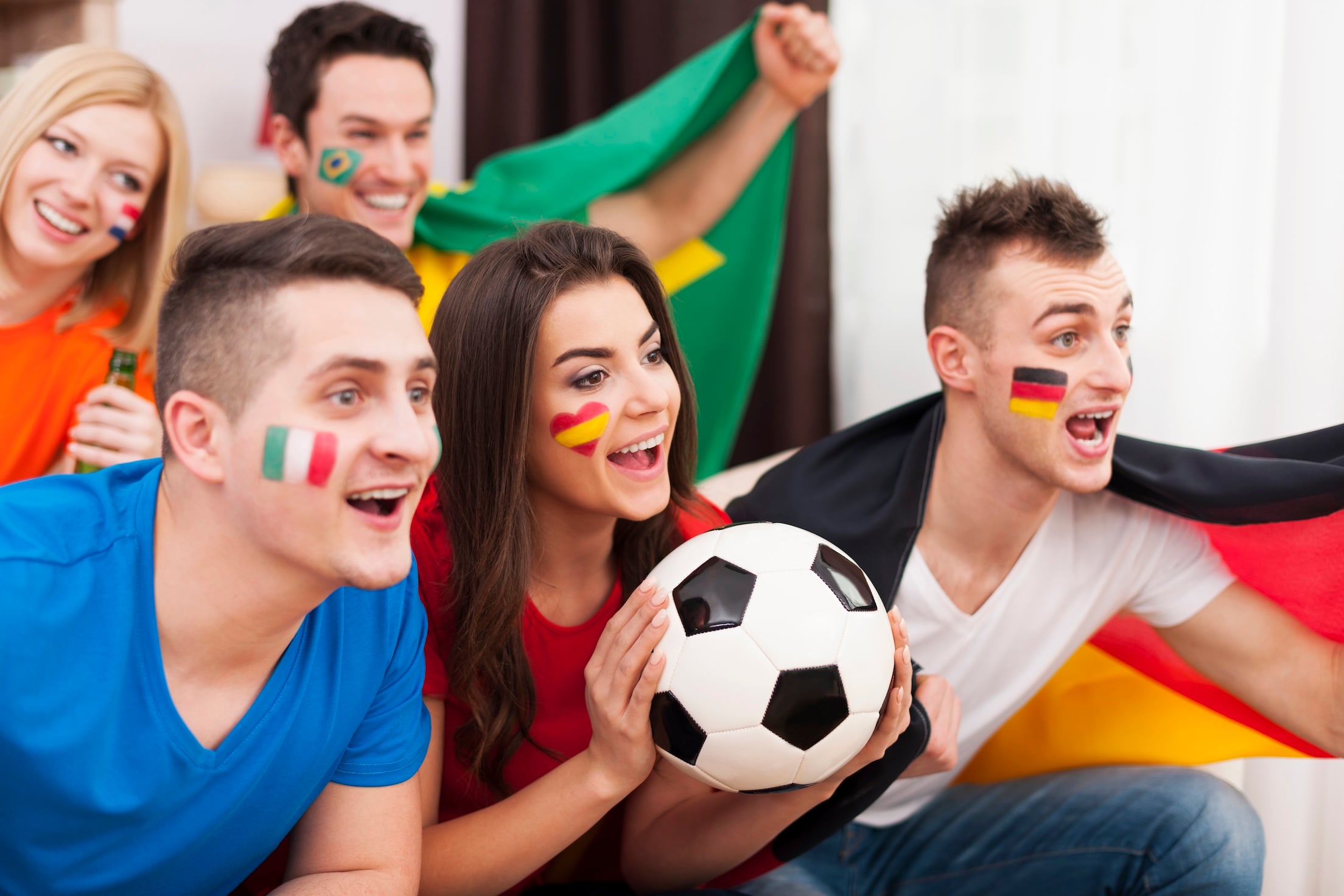
Whether from Argentina, Brazil, England, Japan, Nigeria, Mexico, or dozens of other nations, supporters have celebrated together in our cities, filled restaurants, worn their national colors proudly, and shown genuine appreciation for their experience in the United States. That deserves recognition.
As an American sports fan, I’ve enjoyed watching that.
But here’s where I still struggle.
For all of soccer’s brilliance—and there is brilliance—the sport continues to create barriers for many potential fans.
- The first is the culture of embellishment.
- Every contact does not need to resemble a career-ending injury.
- One moment a player appears unable to walk. Thirty seconds later he’s sprinting down the field as though nothing happened.
- Fans of soccer call it “drawing fouls.” Many Americans simply call it flopping.
It’s difficult to convince new audiences that they are watching the toughest athletes in the world when dramatic reactions become part of the competitive strategy. Basketball has struggled with this. Hockey largely eliminated it. Football penalizes obvious simulation in certain situations.
Soccer still has work to do.
The second issue is something that has never made sense to me.
No one truly knows when the game ends.
Every fan knows there will be “added time.”
But how much?
Four minutes?
Six?
Eight?
Ten?
Twelve?
Only one person on the field truly knows.
- Imagine the Super Bowl entering the final two minutes and the referee simply announcing, “We’ll decide later.”
- Imagine Game 7 of the NBA Finals having an invisible clock.
- Imagine the ninth inning lasting until the umpire felt enough baseball had been played.
- Every major American sport operates under a clock—or rules—that everyone understands.
- Soccer asks everyone else to simply trust the official’s judgment.
That may be tradition.
It doesn’t necessarily make it good. Other sports have evolved and made changes. We never thought we would see like a pitching clock in baseball, protections for NFL quarterbacks that are in some cases, not conducive to making the game greater.
To be fair, referees now receive information from the fourth official and account for substitutions, injuries, goals, VAR reviews, and time-wasting. But greater transparency would strengthen confidence in the process. Recent controversies involving officiating and VAR have only reinforced how important public trust is in the game’s administration. (Reuters)
Yet none of these criticisms should overshadow what this tournament has accomplished.
The World Cup has once again demonstrated that it is one of the greatest sporting events on Earth.
- The atmosphere is extraordinary.
- The passion is authentic.
- The global reach is unmatched.
- The economic impact is enormous.
And for millions of visitors, this tournament has showcased the United States at its very best.
So perhaps the conclusion isn’t that soccer needs to become American.
It doesn’t.
Its traditions are what make it unique.
But if the sport wants to continue winning over skeptics—particularly in the United States—it should be willing to ask whether some traditions actually make the game better or simply make them familiar.
There is room to celebrate soccer’s incredible global success while still acknowledging that certain aspects of the game remain frustrating for many fans.
The World Cup has proven once again that soccer is a global phenomenon.
Now the sport has an opportunity to prove that it can evolve without losing its soul.
That may be the biggest victory of all.
Finally, to educate myself and yes, I think it’s important to step out of our comfort zone and do things that we aren’t really comfortable with, I watched “Mexico 86” (all subtitles by the way) for our REEL SPORTS podcast which you can find on Spotify.
Enjoy your summer and we’ll try to get back later with a Baseball review.
Related content:
Small Business Intersection of Sports, Entertainment and Learning

![Piñón: Plantains Are a Staple of Latino Cooking [Recipe]](https://latinbusinesstoday.com/wp-content/uploads/2022/03/Pinon-Plantains-Are-a-Staple-of-Latino-Cooking-Recipe-2-1.jpg)

